Free NAVLE Practice Exam

50 questions across all official NAVLE species — completely free. Get your score and full answer key by email.

50
Questions
100%
Free
12
Species
0%
0 / 50

Your Score

Start Free Trial — 10,000+ Questions →
Question 1 of 50 0 answered
Question 1 Canine
A 6-year-old male English Bulldog presents on a hot summer day with severe panting, drooling, weakness, and vomiting. Rectal temperature is 108°F (42.2°C). The dog collapses during examination. Blood work reveals: glucose 45 mg/dL (reference: 74-143 mg/dL), BUN 58 mg/dL (reference: 7-27 mg/dL), creatinine 3.2 mg/dL (reference: 0.5-1.8 mg/dL), PT 22 seconds (reference: 11-17 seconds), and aPTT 32 seconds (reference: 14-23 seconds). Which combination of findings indicates the POOREST prognosis in this heat stroke patient?
Question 2 Canine
A 7-year-old female spayed English Cocker Spaniel is presented for evaluation of chronic cough and exercise intolerance. Echocardiography reveals dilated cardiomyopathy with severe left ventricular and left atrial dilation. Whole blood taurine and plasma carnitine concentrations are submitted and both return below the reference range. The dog has been eating a commercially available grain-inclusive diet that meets AAFCO standards. In addition to standard heart failure therapy, which of the following supplementation protocols is most likely to result in improvement of myocardial function?
Question 3 Canine
A 6-year-old spayed female mixed breed dog is presented 10 weeks after surgical repair of a mid-shaft tibial fracture using a bone plate and screws. The owner reports persistent lameness despite initial improvement. Radiographs show a persistent radiolucent fracture line with smooth sclerotic fracture margins, absence of callus formation, and widening of the medullary cavity at the fracture site. The plate appears intact with no signs of implant loosening. Which of the following BEST describes this complication and its most likely etiology?
Question 4 Feline
A 9-year-old neutered male domestic shorthair cat is being evaluated for suspected osteoarthritis. The veterinarian obtains orthogonal radiographs of the elbow joints. Which radiographic finding is MOST commonly associated with feline elbow osteoarthritis?
Question 5 Feline
A 12-year-old domestic shorthair cat with a 6-month history of anterior uveitis secondary to presumed FIV infection presents for recheck. Despite treatment with topical prednisolone acetate and atropine, you notice new findings including iris bombé and elevated IOP of 32 mmHg. What is the pathophysiologic mechanism most likely responsible for the elevated intraocular pressure?
Question 6 Feline
A 6-year-old male neutered domestic shorthair cat presents 3 days after sustaining a laceration to the caudal aspect of the left hock. The cat now has a plantigrade stance with tarsal hyperflexion. Classification according to the Meutstege system reveals a type IIc lesion. What does this classification indicate?
Question 7 Feline
A cat with a chronic diaphragmatic hernia diagnosed 3 weeks post-trauma is scheduled for surgical repair. Which postoperative complication is of PARTICULAR concern in this patient compared to acute cases?
Question 8 Feline
A 7-year-old domestic shorthair cat with diagnosed IBD on prednisolone therapy continues to have intermittent vomiting and weight loss despite dose adjustments over 3 months. Repeat intestinal biopsies show persistent moderate inflammation. Which next therapeutic step would be most appropriate?
Question 9 Feline
A 6-year-old neutered female DSH has a firm, raised mass involving the right upper eyelid. Histopathology reveals sheets of large neoplastic lymphocytes with high mitotic index. Which is the most likely diagnosis?
Question 10 Feline
A colleague asks your opinion about a 2-year-old cat scheduled for onychectomy at her clinic. She notes the clinic's standard protocol includes premedication with acepromazine and butorphanol, induction with propofol, maintenance with isoflurane, and a single dose of meloxicam post-operatively. She wants to know if this analgesic protocol is adequate. Based on current evidence and guidelines, what is the MOST appropriate response?
Question 11 Feline
A 10-year-old hyperthyroid cat has been receiving methimazole treatment for 3 months. The owner reports recent development of generalized weakness and occasional regurgitation. Serum T4 is now within normal limits. Which condition should be suspected, and what is the appropriate initial action?
Question 12 Equine
A 13-year-old Quarter Horse gelding with chronic laminitis undergoes venography to assess vascular perfusion of the foot. The venogram shows absence of contrast filling in the circumflex vessels and reduced filling of the terminal arch. What is the significance of these findings?
Question 13 Equine
A veterinarian is comparing diagnostic tests for equine piroplasmosis. For a horse with suspected acute infection showing fever, anemia, and icterus, which combination of diagnostic tests would provide the most comprehensive acute-phase diagnostic workup?
Question 14 Equine
During a February outbreak at a boarding facility, 12 of 35 horses develop fever, lethargy, and anorexia over a 10-day period. Only 2 affected horses develop soft feces, and none develop profuse diarrhea. CBC on several affected horses shows lymphopenia with or without neutropenia. Fecal qPCR testing on 6 affected horses is positive for equine coronavirus. One 15-year-old mare with diabetes mellitus also develops signs of severe depression, head pressing against the wall, and circling. Her blood ammonia level is 485 µmol/L (normal ≤60 µmol/L). What is the pathophysiological basis for her neurological signs?
Question 15 Equine
A 17-year-old Arabian gelding is diagnosed with chronic kidney disease based on azotemia, isosthenuria, and weight loss. The owner wishes to know the best prognostic indicator for this horse's survival. Based on current evidence, which of the following parameters best predicts prognosis in equine CKD?
Question 16 Equine
A veterinarian is examining lateral skull radiographs of a 10-year-old Warmblood gelding with chronic unilateral epistaxis. On the radiograph, there is loss of the normal laminated appearance of the ethmoturbinates, replaced by a homogeneous mass effect in the ethmoid region. Soft tissue opacity is also noted in the frontal sinus. What is the most likely radiographic interpretation?
Question 17 Equine
A 12-year-old pregnant mare at 330 days gestation presents with severe colic, tachycardia (68 bpm), and sweating. Rectal palpation reveals a 270° uterine torsion. The cervix is partially dilated. Transabdominal ultrasonography shows fetal bradycardia (50 bpm) and placental edema with thickened CTUP complex. What is the most appropriate treatment approach?
Question 18 Equine
During extraction of a maxillary wolf tooth in a 2-year-old gelding, you encounter unexpected significant hemorrhage that continues despite digital pressure. The blood appears to be pulsatile and bright red. What is the most likely source of bleeding and the most appropriate immediate management?
Question 19 Bovine
A beef producer is experiencing poor pregnancy rates in a natural-service herd. Several cows have returned to estrus at irregular long intervals. Testing confirms the presence of both Tritrichomonas foetus and Campylobacter fetus subspecies venerealis in the herd. Which statement regarding these two diseases is CORRECT?
Question 20 Bovine
A dairy nutritionist is formulating a close-up dry cow ration to prevent milk fever. The current ration has a dietary cation-anion difference (DCAD) of +180 mEq/kg DM. What is the target DCAD range and expected urine pH for effective milk fever prevention in Holstein cows?
Question 21 Bovine
A feedlot veterinarian is investigating increased morbidity and mortality from bovine respiratory disease (BRD) despite appropriate vaccination and treatment protocols. Trace mineral analysis of liver samples from necropsied calves reveals copper at 18 ppm and selenium at 0.12 ppm wet weight. How might these mineral deficiencies contribute to the BRD problem?
Question 22 Bovine
During surgical repair of a full-thickness teat laceration in a lactating Holstein cow, you are preparing to close the wound in layers. Which of the following statements regarding suture selection and technique is CORRECT?
Question 23 Bovine
A 2-year-old Holstein heifer accidentally fed sheep mineral for several weeks suddenly develops depression, weakness, port-wine urine, icterus, and pale mucous membranes; she dies within 48 hours. Necropsy shows a gunmetal-blue kidney and friable orange liver. Which statement about this toxicosis is most accurate?
Question 24 Bovine
A veterinarian accidentally receives a needlestick injury while vaccinating cattle with Brucella abortus RB51 vaccine. What is the most appropriate recommendation?
Question 25 Bovine
A 6-year-old beef cow has been in labor for 10 hours with a calf in transverse presentation. The spine of the calf is palpable running perpendicular to the cows spine and neither the head nor limbs can be reached. What is the most appropriate management for this presentation?
Question 26 Porcine
A veterinarian submits CNS tissue samples from pigs with suspected teschovirus encephalomyelitis to the diagnostic laboratory. The laboratory reports positive RT-PCR results for porcine teschovirus but also detects porcine sapelovirus and enterovirus G in the same samples. Given that multiple porcine picornaviruses are detected, how should these results be interpreted in the context of the neurological disease?
Question 27 Porcine
A 500-head nursery operation reports that approximately 29% of pigs have died following introduction of a new feed delivery 5 days ago. The surviving pigs show anorexia, respiratory distress, ataxia, and hindlimb weakness. The producer mentions that pigs had been receiving Denagard (tiamulin) in water at 10.5 mg/lb to combat secondary respiratory pathogens. Feed analysis reveals narasin at 107 ppm in the ration. Which of the following statements regarding diagnostic confirmation is CORRECT?
Question 28 Porcine
A swine breeding operation reports that 18% of their gilt litters experience some degree of savaging, compared to only 3% of multiparous sow litters. The genetic consultant notes that the replacement gilt line was selected for high lean growth and low backfat. Farrowing supervision shows that gilts experiencing savaging display more frequent posture changes, rearing behavior, and an inability to lie down carefully compared to non-savaging gilts. Which pathophysiological mechanism BEST explains the higher savaging incidence in these gilts?
Question 29 Ovine and Caprine
A veterinarian is conducting postmortem examinations on sheep from a flock experiencing chronic respiratory disease. One 4-year-old ewe has enlarged, firm lungs with gray mottling consistent with maedi. Another ewe of similar age has firm gray lung tissue but also distinct nodular lesions in the cranioventral lung lobes that produce frothy fluid on cut surface. Histopathology of the second ewe reveals both lymphocytic interstitial pneumonia AND bronchioloalveolar carcinoma. What does this finding indicate about the relationship between these two conditions?
Question 30 Ovine and Caprine
A flock of 200 lambs in a feedlot environment presents with an outbreak of polyarthritis affecting approximately 15% of the animals. Affected lambs are 4-5 months old and developed fever and reluctance to move within 3 weeks of arriving at the feedlot. Several lambs also have concurrent conjunctivitis. Joint swelling is present but relatively mild compared to the degree of lameness. Most cases appear to be self-limiting over 10-14 days. Which pathogen is most likely responsible for this outbreak?
Question 31 Ovine and Caprine
A 12-day-old Boer goat kid develops severe watery diarrhea and marked dehydration (estimated 10% dehydration). The kid is depressed and unable to stand. Physical examination reveals sunken eyes, prolonged skin tent (>5 seconds), cold extremities, and weak pulse. Which fluid therapy approach is most appropriate for initial stabilization?
Question 32 Poultry
Regarding the zoonotic potential of avian tuberculosis, which statement is most accurate?
Question 33 Poultry
A breeder flock has decreased hatchability with white diarrhea and high mortality in newly hatched chicks. Necropsy of dead chicks reveals miliary white nodules in the heart, lungs, and yolk sac. Culture isolates a non-motile lactose-negative Gram-negative rod. Which disease is suspected, and what is the regulatory significance?
Question 34 Pet Bird
A recently hatched 1-week-old Moluccan cockatoo chick from a known PBFD-positive breeding hen dies acutely. At necropsy, the following findings are noted: pale musculature, hepatomegaly with multifocal white foci, diffuse subcutaneous ecchymoses, splenomegaly, and no feather abnormalities. Histopathology of the liver reveals intranuclear and intracytoplasmic basophilic inclusion bodies in hepatocytes. PCR of liver tissue is positive for BFDV. Which form of PBFD does this represent, and why are no feather abnormalities present?
Question 35 Pet Bird
A 3-year-old cockatiel (Nymphicus hollandicus) is presented with a 3-week history of progressive lethargy weight loss bilateral nasal discharge lime-green droppings and mild dyspnea. The owner reports acquiring two new cockatiels from a pet store 6 weeks ago. Physical exam reveals a fluffed depressed bird with conjunctival hyperemia watery droppings with lime-green coloration and mild hepatomegaly on palpation. CBC shows leukocytosis with monocytosis. Chemistry panel shows elevated AST and bile acids. Which diagnostic test combination would MOST definitively confirm the suspected diagnosis?
Question 36 Aquatics
A diagnostic laboratory isolates a virus from diseased carp using EPC cells. Cytopathic effect appears at day 5 at 20°C. The virus has a bullet-shaped morphology. Which additional characteristic would distinguish SVCV from IHNV?
Question 37 Aquatics
A veterinarian is investigating chronic anemia in a population of farmed Atlantic salmon. The fish display reduced growth, lethargy, and pale gills. Histopathological examination of the head kidney reveals increased erythroid precursors with megaloblastic changes. Which nutritional deficiency is MOST likely responsible?
Question 38 Reptile
A sea turtle rehabilitation center receives a loggerhead turtle (Caretta caretta) with propeller strike injuries to the carapace. Three large fracture fragments are displaced and contaminated with marine debris. The coelomic cavity is not exposed. After initial stabilization, what is the most appropriate method for fracture stabilization in this case?
Question 39 Other Small Mammal
A guinea pig diagnosed with streptococcal pneumonia also has limb swelling and reluctance to move. Radiographs reveal periarticular soft tissue swelling and joint effusion in multiple joints. What concurrent deficiency should be suspected as contributing to this presentation?
Question 40 Camelidae and Cervidae
Following surgical repair of a comminuted metatarsal fracture in an adult llama using bone plates and lag screws, the animal develops progressive swelling, heat, and drainage at the surgical site 3 weeks postoperatively. Radiographs show bone lysis around the screws and periosteal reaction. Culture of the drainage yields Staphylococcus aureus. What is the most appropriate management strategy?
Question 41 Canine
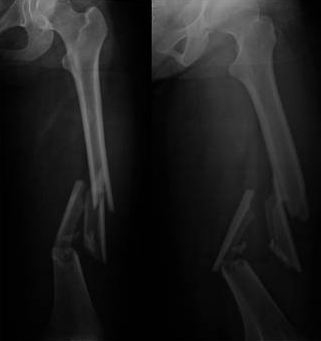
A 2-year-old intact male Labrador Retriever is presented after being hit by a car. On examination, the dog is non-weight bearing on the left pelvic limb with crepitus and swelling in the mid-femoral region. Thoracic radiographs reveal no abnormalities. Orthogonal radiographs of the left femur show a comminuted mid-diaphyseal fracture with significant displacement and overriding of fragments. Which of the following fixation methods would provide the MOST appropriate stabilization for this fracture?
Question 41 image
Question 42 Canine
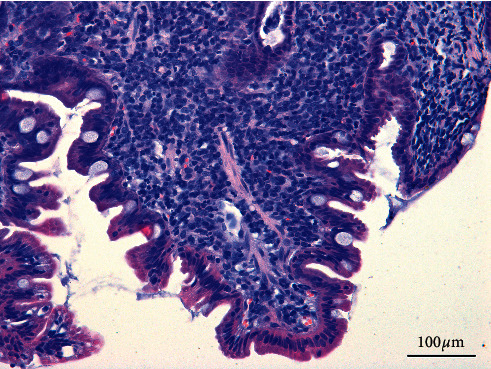
A 9-year-old male castrated Golden Retriever with a 6-month history of chronic vomiting, diarrhea, and weight loss undergoes endoscopy. The duodenal mucosa appears thickened and irregular. Histopathology shows a monomorphic population of lymphocytes infiltrating the lamina propria with extension into the submucosa. Which concern does this finding raise regarding the diagnosis?
Question 42 image
Question 43 Canine
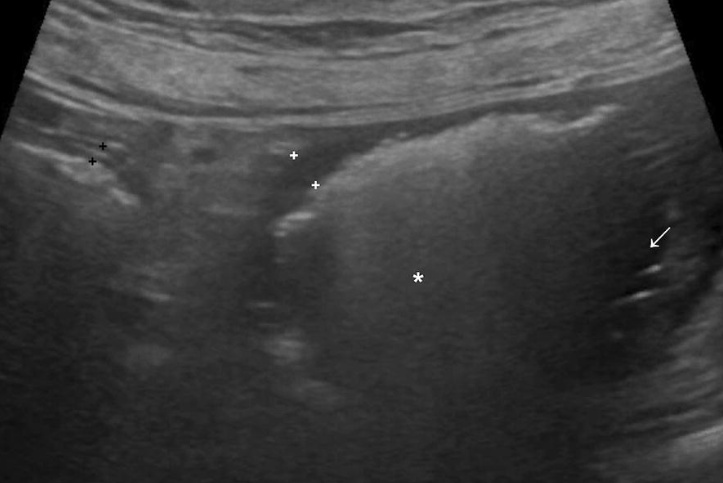
A 9-year-old intact female Rottweiler presents in shock with pale mucous membranes, weak pulses, and a distended abdomen. The dog has had progressive lethargy for 5 days with no vaginal discharge observed. Emergency abdominal ultrasound reveals a markedly enlarged, fluid-filled uterus. Blood work shows severe neutropenia with a degenerative left shift, azotemia, and elevated liver enzymes. Which type of pyometra does this presentation represent, and why does it carry a worse prognosis?
Question 43 image
Question 44 Canine
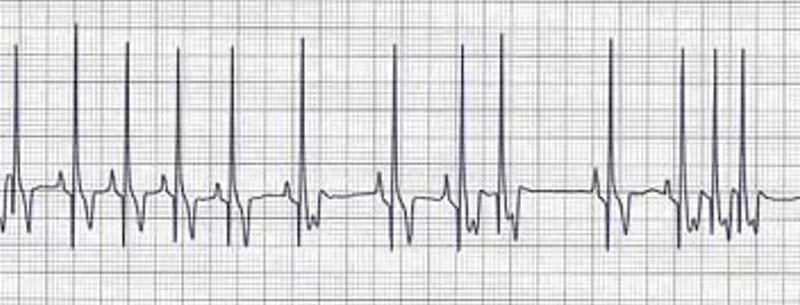
A 7-year-old male neutered Irish Wolfhound presents with a 2-week history of exercise intolerance and occasional coughing. On auscultation, the heart rhythm sounds like 'tennis shoes in a dryer.' Heart rate is 220 bpm and irregularly irregular. Thoracic radiographs show severe cardiomegaly with pulmonary venous congestion. Echocardiography reveals dilated cardiomyopathy with a fractional shortening of 12% (reference: 25-45%). What combination of medications would be most appropriate for rate control of this arrhythmia?
Question 44 image
Question 45 Canine
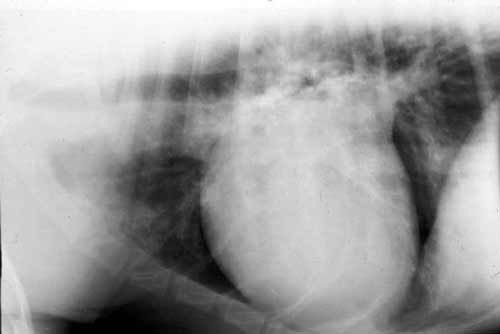
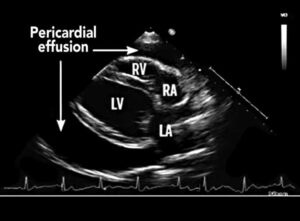
A 10-year-old spayed female German Shepherd Dog presents with lethargy, ascites, and exercise intolerance. Echocardiography reveals a large anechoic space surrounding the heart with diastolic collapse of the right atrium. A 4 cm irregular mass is visible on the right atrial appendage. What is the most likely diagnosis and prognosis?
Question 45 image
Question 46 Canine
A 3-year-old intact female German Shepherd Dog arrests during emergency surgery for gastric dilatation-volvulus (GDV). The ECG shows pulseless electrical activity (PEA). Serum potassium measured 2 minutes prior to arrest was 7.8 mEq/L. In addition to standard CPR interventions, which treatment is most critical to address the likely underlying cause?
Question 46 image
Question 47 Canine
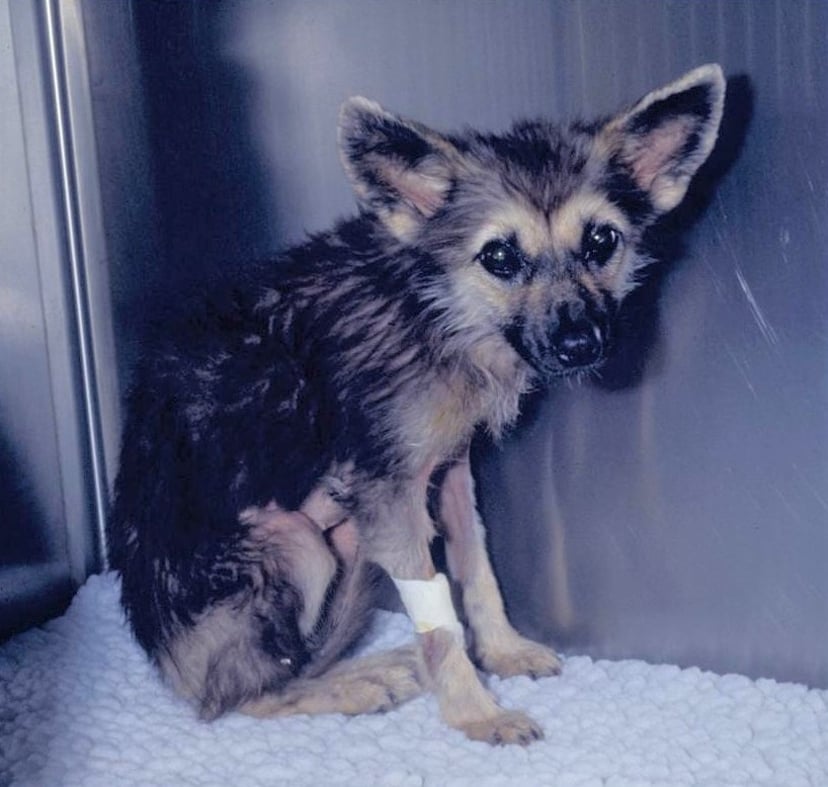
A 6-month-old male German Shepherd Dog is presented for failure to grow appropriately compared to littermates. The owners report he retains a soft, woolly coat without guard hairs. Physical examination reveals proportionate dwarfism, bilateral symmetric alopecia sparing the head and distal extremities, and bilateral cryptorchidism. Serum chemistry reveals mildly elevated creatinine. Which hormone deficiency pattern is most consistent with this presentation?
Question 47 image
Question 48 Canine
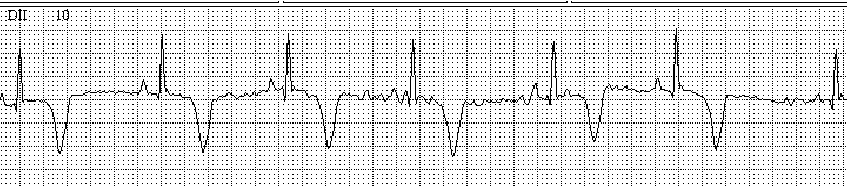
An 8-year-old neutered male West Highland White Terrier presents with weakness and muscle fasciculations. Serum total calcium is 5.0 mg/dL with ionized calcium of 0.62 mmol/L. The phosphorus is 7.8 mg/dL. An ECG is performed. Which ECG abnormality would be most consistent with this patient's electrolyte status?
Question 48 image
Question 49 Canine
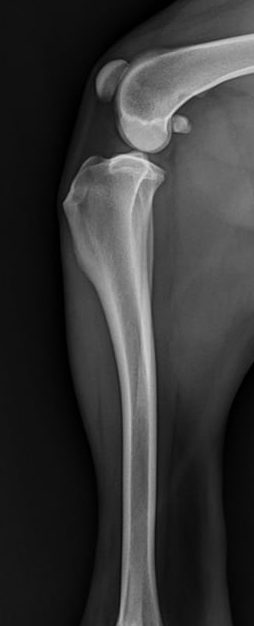
A 5-year-old female spayed mixed breed dog (32 kg) presents with a 2-week history of left hindlimb lameness that worsens after exercise. Physical examination reveals left stifle effusion, a positive cranial drawer sign when the stifle is flexed, but no instability when the stifle is extended. The tibial compression test is positive. There is no audible click. What is the MOST likely diagnosis?
Question 49 image
Question 50 Canine
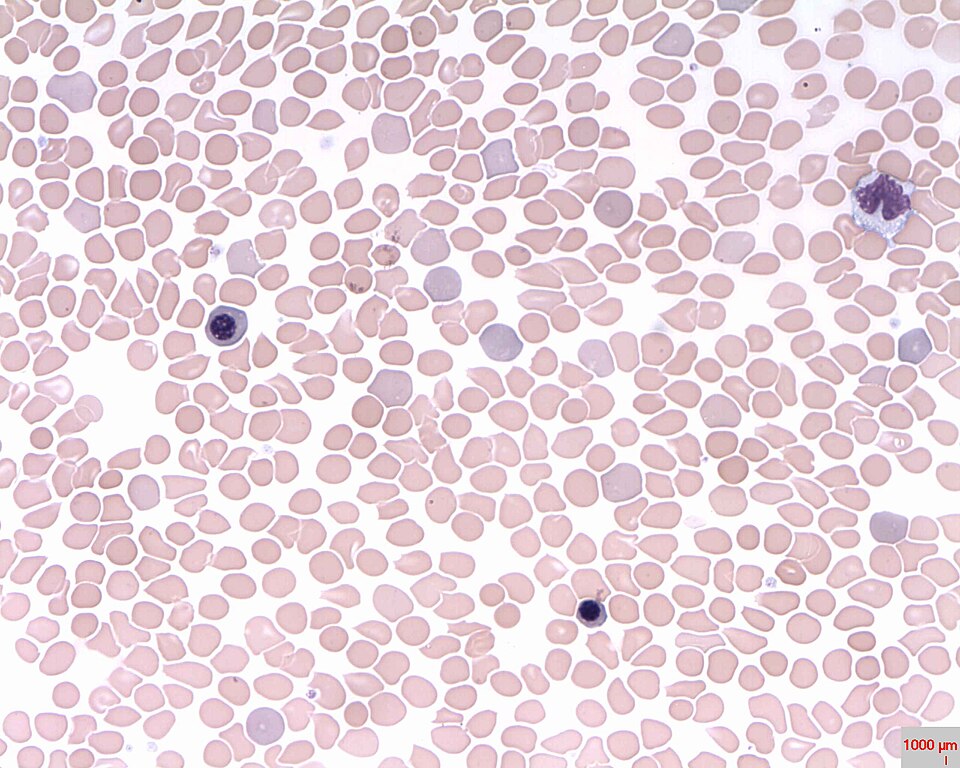
A 6-year-old spayed female English Springer Spaniel with well-controlled idiopathic epilepsy on phenobarbital for 2 years presents for routine recheck. The owner reports the dog is doing well with no seizure activity. Physical examination is unremarkable. CBC reveals PCV 28% (reference: 37-55%), MCV 72 fL (reference: 60-77 fL), reticulocyte count 312,000/uL, and normal WBC and platelet counts. Blood smear shows marked polychromasia, occasional Howell-Jolly bodies, and eccentrocytes. Serum chemistry shows mildly elevated ALT. What is the most likely cause of this dog's anemia?
Question 50 image

NAVLE Exam Prep Platform

Ready to pass the NAVLE for real?

10,000+ Practice Questions
Every species, with full explanations
Real Past Exam Papers
Authentic previous exam questions
Timed Mock Exams
Simulate the real 360-question NAVLE
High-Yield Study Guides
Focus on what's actually tested
Start Free Trial → See Plans & Pricing No credit card required

NAVLE Free Practice Exam — Frequently Asked Questions

Is this NAVLE practice exam really free?

Yes. All 50 questions are free to take, your score is shown instantly, and the full answer key with explanations is emailed to you at no cost.

How many questions does the real NAVLE have?

The actual NAVLE contains 360 multiple-choice questions delivered in six blocks of 60. This free practice exam gives you a representative 50-question sample to gauge your readiness.

What topics are covered?

This free practice exam draws from the official NAVLE species and clinical topics, including Aquatics, Bovine, Camelidae and Cervidae, Canine, Equine, Feline, Other Small Mammal, Ovine and Caprine, Pet Bird, Porcine.

Will I get explanations?

Yes — after you finish and enter your email, we send a detailed answer key explaining the correct answer for every single question.